The High-Stakes Game of LinkedIn Visibility in 2026
You spend an hour writing a post. You obsess over the line breaks. You hit publish at 2:00 PM on a Friday, sit back, and wait for the likes to roll in.
Jump to a section:
- The High-Stakes Game of LinkedIn Visibility in 2026
- When is the Best Time to Post on LinkedIn in 2026?
- The Algorithm Evolution: Why Timing is More Complex Now
- Strategy 1: Capturing the 'Professional Transition' Windows
- Strategy 2: Using the 48-Hour Content Decay Cycle
- Strategy 3: Mapping Timezones for Global Reach
- 6 Reasons Your LinkedIn Reach is Still Dropping
- Real-World Examples: Timing Before and After
- The Consistency Bridge: Why the 'Perfect Time' is a Trap
- The 2026 LinkedIn Posting Checklist
- LinkedIn Engagement FAQ
- Turning Data into Influence
Two hours later? You have three views and a pity like from your old college roommate.
Sound familiar? We have all been there. Finding the best time to post on linkedin isn't just about guessing when people are awake anymore. In 2026, the algorithm has fundamentally shifted away from simple chronological recency. It now optimizes for "relevance plus dwell velocity." This means the initial window right after your post goes live dictates whether your content dies quietly or reaches beyond your immediate network.
Ready to save 15+ hours every week?
Join other creators who've automated their social media with SocialCal.
Get started freeWhen is the Best Time to Post on LinkedIn in 2026?
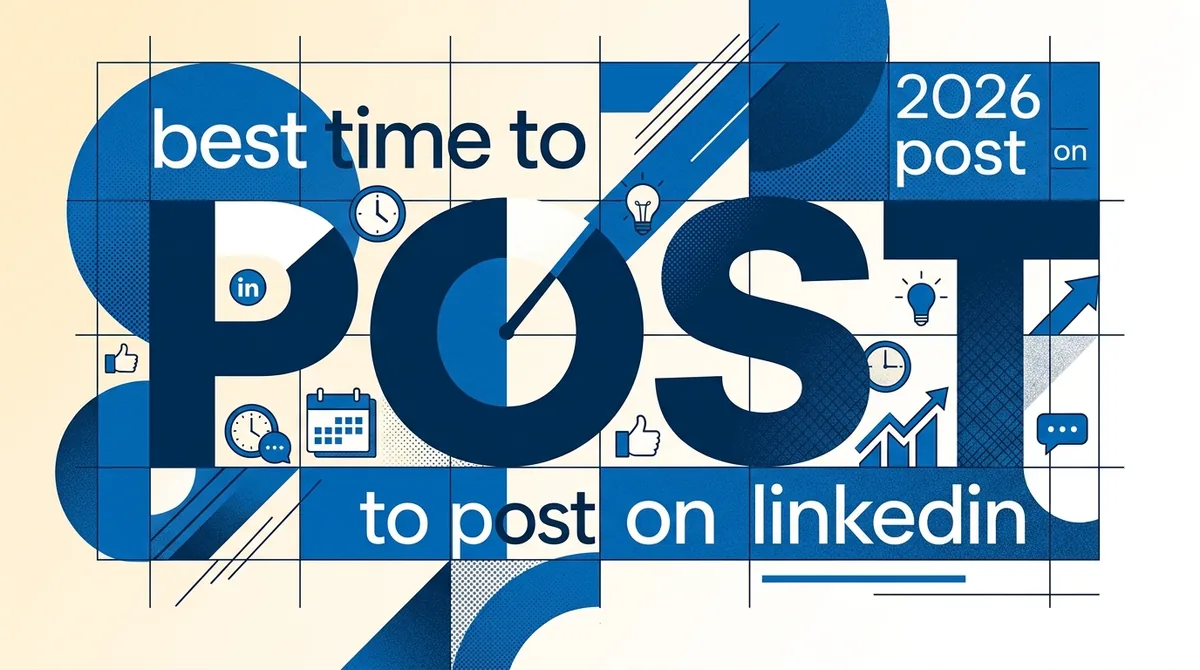
The best time to post on LinkedIn is Tuesday, Wednesday, and Thursday between 8:00 AM and 11:00 AM in your target audience's primary timezone. While AI-driven feeds prioritize total dwell time, posting during these specific morning windows triggers the initial engagement velocity required to sustain reach for 24 to 48 hours.
The Algorithm Evolution: Why Timing is More Complex Now
To understand why timing matters, you have to understand the Dwell-Time Habit Loop. The algorithm measures early engagement velocity. It watches exactly how long users stop scrolling to read your post in its first 60 minutes.
If you publish while your audience is deep in an Excel sheet or wrangling a Zoom meeting, they might scroll past without stopping. That sends a lethal signal to the algorithm. It assumes your content is low-value.
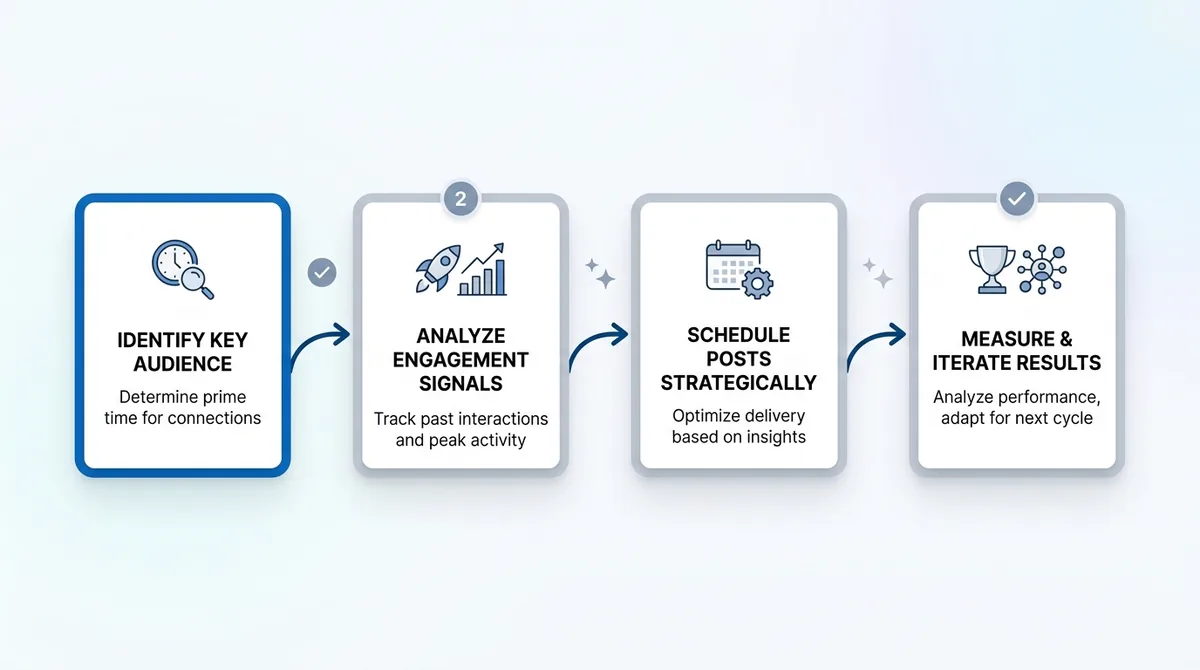
Before you even begin testing how often to post on your personal profile, you have to master the timing of that first daily drop. You need to catch people when they are actually open to consuming professional information.
Strategy 1: Capturing the 'Professional Transition' Windows
People do not browse LinkedIn during deep work. They check it during micro-breaks and transitions. Commuting on the train. Waiting for a coffee. Sitting in a lobby five minutes before a client meeting.
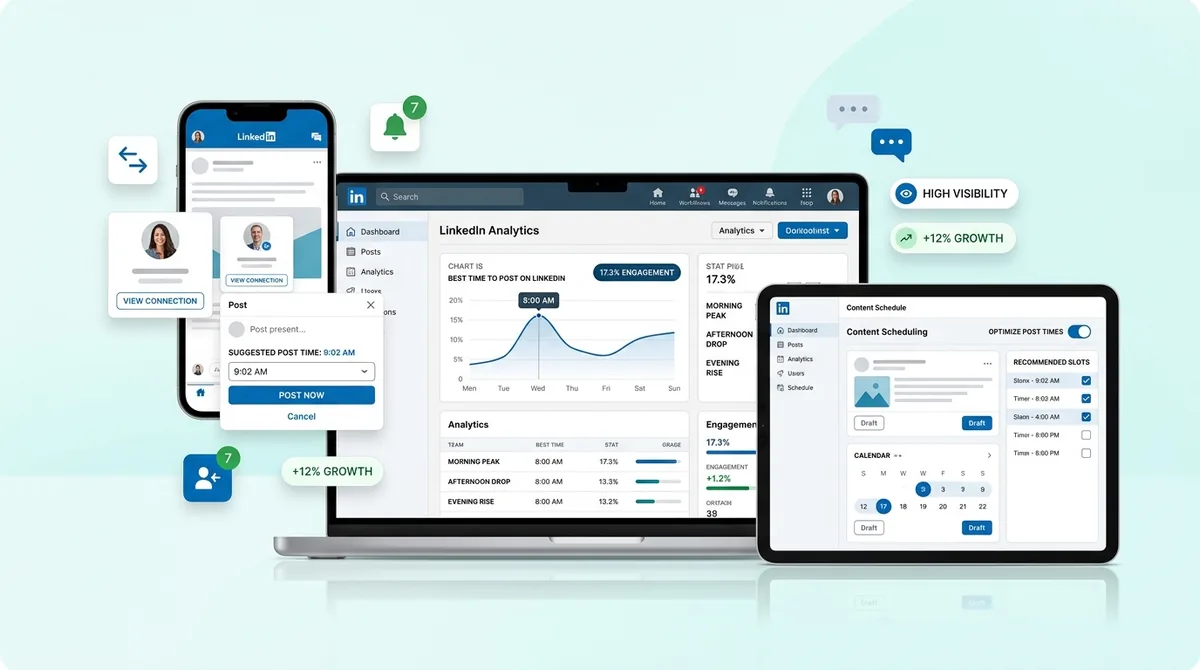
Most creators get this wrong by scheduling posts exactly on the hour. Do not post at 9:00 AM. That is when the meeting starts. Post at 8:45 AM. By the time they pull out their phone to kill five minutes before their boss logs onto the call, your post is sitting right at the top of their feed.
The 'First Coffee' Scroll vs. The Lunch Break Lull
I see a lot of generic advice telling you to post during the lunch break. In practice, this rarely works for B2B content. At 12:30 PM, people want an escape. They open TikTok or Instagram for entertainment.
Between 8:30 AM and 9:30 AM, their brain is still in information-gathering mode. They are looking for industry news, leadership tips, or networking opportunities. Match the platform intent with their psychological state.
Strategy 2: Using the 48-Hour Content Decay Cycle
LinkedIn posts have a longer shelf life now. But that longevity is entirely dependent on early metrics.
Mechanistically, the AI tests your post with roughly 5% of your active followers first. If they interact—by clicking "see more", leaving a comment, or just dwelling on the text—the AI expands the reach to 10%. If that group engages, it pushes it to connections of connections.
Optimizing for Post-Publishing Velocity
The first 60 minutes are the Critical Hour. The worst thing you can do is publish a post and immediately close the app. You need to be online and active for at least 20 minutes after hitting publish to respond to comments instantly. Fast creator replies act as a multiplier for early velocity.
Also, readability directly impacts that initial dwell time. If you want to make sure your formatting doesn't look like a cluttered mess on mobile, run your text through a post previewer first. Messy line breaks kill dwell time faster than anything else.
Strategy 3: Mapping Timezones for Global Reach
If you have an international audience, you cannot satisfy everyone. You have to pick an anchor point.
According to LinkedIn's official demographic data, the platform has a massive global footprint, but the engagement center of gravity often leans toward US Eastern Standard Time (UTC-5) for English-speaking business networks.
The 'Shadow Window' for International Audiences
Using the EST anchor is incredibly effective. A post at 10:00 AM EST is brilliant. It catches the US East Coast mid-morning, the US West Coast as they wake up at 7:00 AM, and the London crowd at 3:00 PM as they hit their afternoon slump.
That one specific time slot bridges three distinct behavioral transitions across the globe.
6 Reasons Your LinkedIn Reach is Still Dropping
Timing only works if your behavior aligns with platform rules. Here are the most common unforced errors.
Mistake: The 'Set and Forget' Mentality
Dumping a post onto the feed and walking away kills the social aspect of the algorithm. If someone leaves a thoughtful comment and you ignore it for ten hours, the algorithm stops serving your post to their network.
Mistake: Ignoring Local Holidays and Cultural 'Dark Zones'
Dropping a highly technical 12-slide carousel on a US Bank Holiday is a waste of a good idea. The total active user base drops. Your post gets minimal early engagement. The algorithm flags it as a dud. Save your best content for normal working days.
Mistake: Over-Tagging Connections
Tagging 15 people in your post hoping they will comment is a massive red flag to the AI. If you tag people and they do not interact, LinkedIn actively penalizes the post's reach.
Real-World Examples: Timing Before and After
I watched a B2B SaaS founder struggle with this for months. He preferred writing late at night, so he would just publish his thoughts at 11:30 PM. He assumed his audience would see it the next morning.
They didn't. By 8:00 AM, his post was buried under thousands of fresh morning updates.
Case Study: The 300% Reach Increase via Tuesday Syncing
He shifted his strategy. Instead of posting instantly at midnight, he held his drafts. He started dropping them strictly on Tuesdays and Thursdays at 8:45 AM EST. Within three weeks, his average post views went from 400 to over 1,500. He didn't change his writing style. He just changed his delivery window to match his audience's transition periods.
The Consistency Bridge: Why the 'Perfect Time' is a Trap
Here is what nobody tells you about social media growth. Finding the perfect time once does absolutely nothing for your account.
The algorithm rewards predictable patterns. If you post randomly—Monday at noon, Wednesday at 2 AM, Friday at 4 PM—the algorithm doesn't know when to expect high-quality signals from your profile. But if you post every Tuesday and Thursday at 9:15 AM, you train both the AI and your audience to look for you.
The real issue isn't finding the ideal time slot. It's being able to hit that slot reliably while running your actual business. This is where a LinkedIn Scheduler becomes the most important asset in your workflow. SocialCal lets you write your posts when you feel creative on a Sunday night, but schedules them to hit the timeline precisely during those high-velocity morning windows. It builds that consistency bridge automatically.
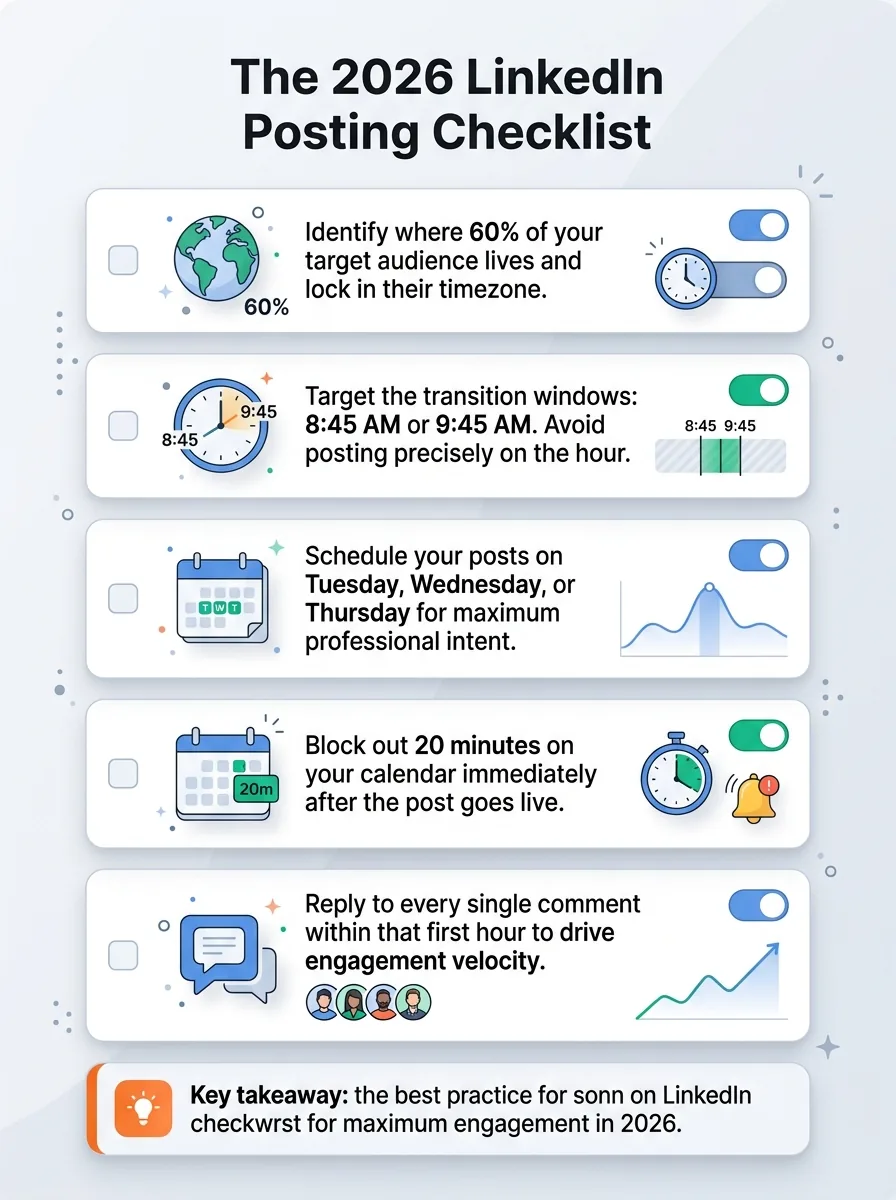
The 2026 LinkedIn Posting Checklist
Identify where 60% of your target audience lives and lock in their timezone.
Target the transition windows: 8:45 AM or 9:45 AM. Avoid posting precisely on the hour.
Schedule your posts on Tuesday, Wednesday, or Thursday for maximum professional intent.
Block out 20 minutes on your calendar immediately after the post goes live.
Reply to every single comment within that first hour to drive engagement velocity.
LinkedIn Engagement FAQ
Is it bad to post twice a day on LinkedIn?
Yes, usually. LinkedIn's algorithm heavily favors spacing. A second post published within 18 hours of the first will typically cannibalize the reach of your original post.
Do weekend posts work in 2026?
Sunday evenings (around 6:00 PM to 8:00 PM) can perform surprisingly well for career-advice or reflective content, as professionals mentally prep for the week. Saturdays are generally dead zones for B2B reach.
How does video timing differ from text posts?
Video requires higher commitment. Text posts do well in quick morning transitions, but short-form video often peaks slightly later in the day (around 11:00 AM) when users have settled into their desks and can put headphones on.
Ready to save 15+ hours every week?
Join other creators who've automated their social media with SocialCal.
Get started freeTurning Data into Influence
Timing creates the opportunity, but consistency creates the authority. You can memorize every statistical peak window on the internet, but if you only post once a month, the algorithm will ignore you. Use the data to map out your week, rely on tools like SocialCal to maintain your cadence without burning out, and focus your actual energy on writing things worth reading.